01
The example
An example (Maya is not a real person)
Maya builds a photo-sharing app. Every morning about 10,000 new uploads arrive, and some are illustrations or renders posted as real photos. Her one moderator cannot look at all of them.
A test of Gemini Decision 1 · Nov 11, 2026
Google's new Gemini Decision 1 answers yes/no and pick-one questions with a confidence number. I checked whether that number tells the truth, then turned it into a rule anyone can use: above a line, the model decides; below it, a person does.
Try it yourselfAn example (Maya is not a real person)
Maya builds a photo-sharing app. Every morning about 10,000 new uploads arrive, and some are illustrations or renders posted as real photos. Her one moderator cannot look at all of them.
Checking every upload by hand takes all day. Letting a model decide everything is risky, because it is sometimes wrong and never says so.
If the model can say how sure it is, a person only has to look where the model is unsure. That only works if the confidence number is honest.
Gemini Decision 1 does not write text. It scores fixed answers, such as real photo or illustration, and returns a probability and a confidence for each question, in one call.
Pick a line. When the confidence is at or above it, the app accepts the model's answer. Below it, the photo goes to a person. On this page the line is 0.8.
In my test, with the line at 0.8, the model handled 55 of 58 NASA photos on its own with no mistakes, and handed 3 to a person.
For a developer
Measured
Projected from the test
at 10,000 photos a day, about 520 would reach a person instead of 10,000. If one look takes 10 seconds (my assumption), that is about 1.4 hours of checking instead of about 28.
For a support lead
Measured
Projected from the test
of 200 emails in a morning, about 54 would reach a person.
For a CEO
Measured
Projected from the test
a million photo decisions would cost about $119.
| Confidence | 0.5–0.6 | 0.6–0.7 | 0.7–0.8 | 0.8–0.9 | 0.9–1.0 |
|---|---|---|---|---|---|
| Confidence | 0.544 | 0.655 | 0.751 | 0.854 | 0.958 |
| Accuracy | 0.517 | 0.657 | 0.844 | 1.000 | 0.993 |
| n | 29 | 35 | 32 | 115 | 134 |
One answer is not in a band: on an ambiguous email with five possible categories, the model's top pick had 0.47 confidence, below 0.5. The bands hold 345 of the 346 answers.
"Is N prime?" and "Is N composite?"
90%
of pairs within 0.10 of 1
n = 50
Questions with no information (coin, card, die)
Average confidence
0.517
highest 0.53, across 30 questions
n = 30
I wrote these predictions down before my first call to the model, then scored them exactly as written. The whole test cost $0.0093 (64 requests).
| ID | Prediction | Result | Pass / Fail |
|---|---|---|---|
| P1 | Overall calibration error at or below 0.08 | 0.073 on the 345 answers in the bands (0.075 counting the one answer below 0.5); 90.5% right overall | Pass |
| P2 | In every confidence band with 20+ answers, accuracy within 10 points of confidence | The 0.8 to 0.9 band (115 answers) was 100% right at 85% average confidence: more careful than it claimed | Fail |
| P3a | "Is N prime?" and "Is N composite?" add up to about 1 for 90%+ of 50 numbers | 90% of pairs within 0.10 of 1 | Pass |
| P3b | Questions with no information (coin, card, die) stay near 50% | Average confidence 0.517, highest 0.53, across 30 questions | Pass |
| P4 | At a 0.9 line, the model handles 60%+ of photos with 95%+ right | It handled 4 of 58 (all right). At 0.8 it handled 55 of 58, all right | Fail |
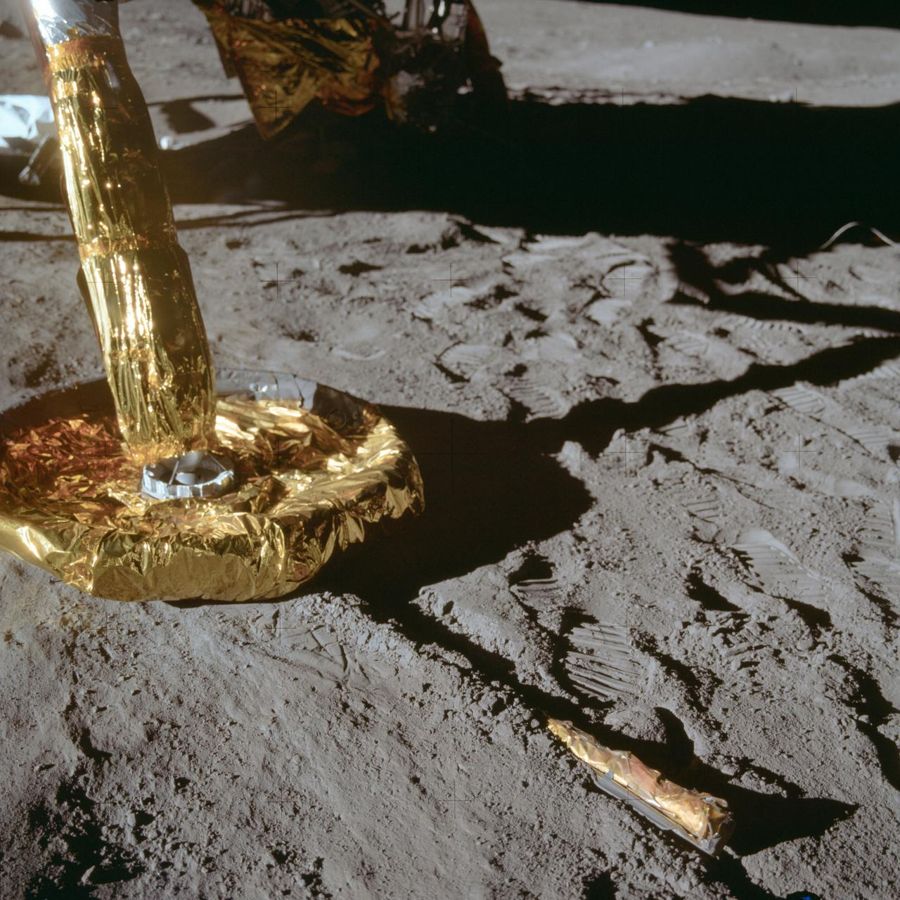
14 of the NASA images from the test. Decide first: real photo or illustration? Then see what Gemini Decision 1 said, how sure it was, and the answer from NASA's own label. Below the 0.8 line, the model hands the call to you.
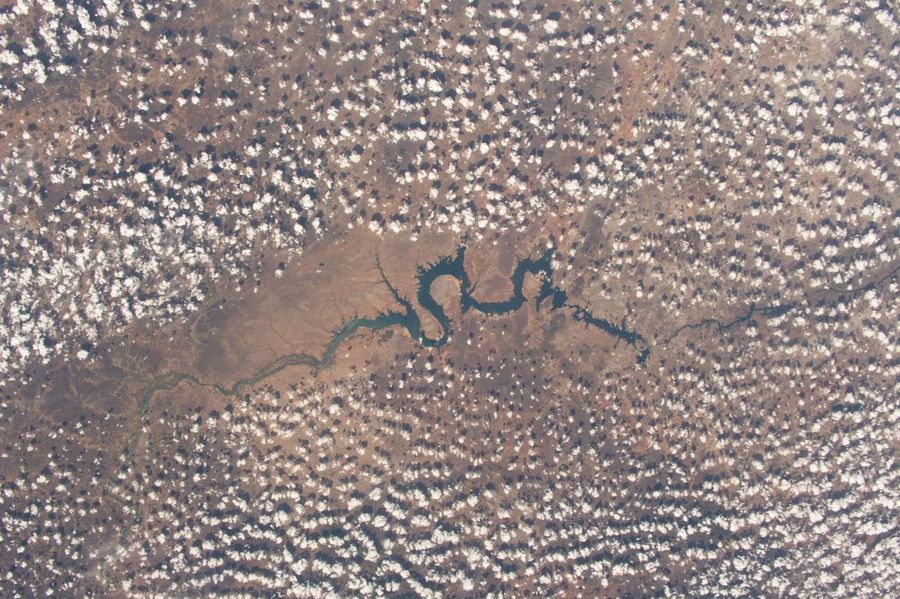
Below the line: the model hands this one to you.
Test and page: Sidra MiconiAnswers: Gemini Decision 1 (gemini-decision-1), computed once on Nov 11, 2026Images and labels: NASA (public domain)Page code written with Claude Opus 5.5