Founder · AgentGlass

I build the reliability layer
for the agentic web.

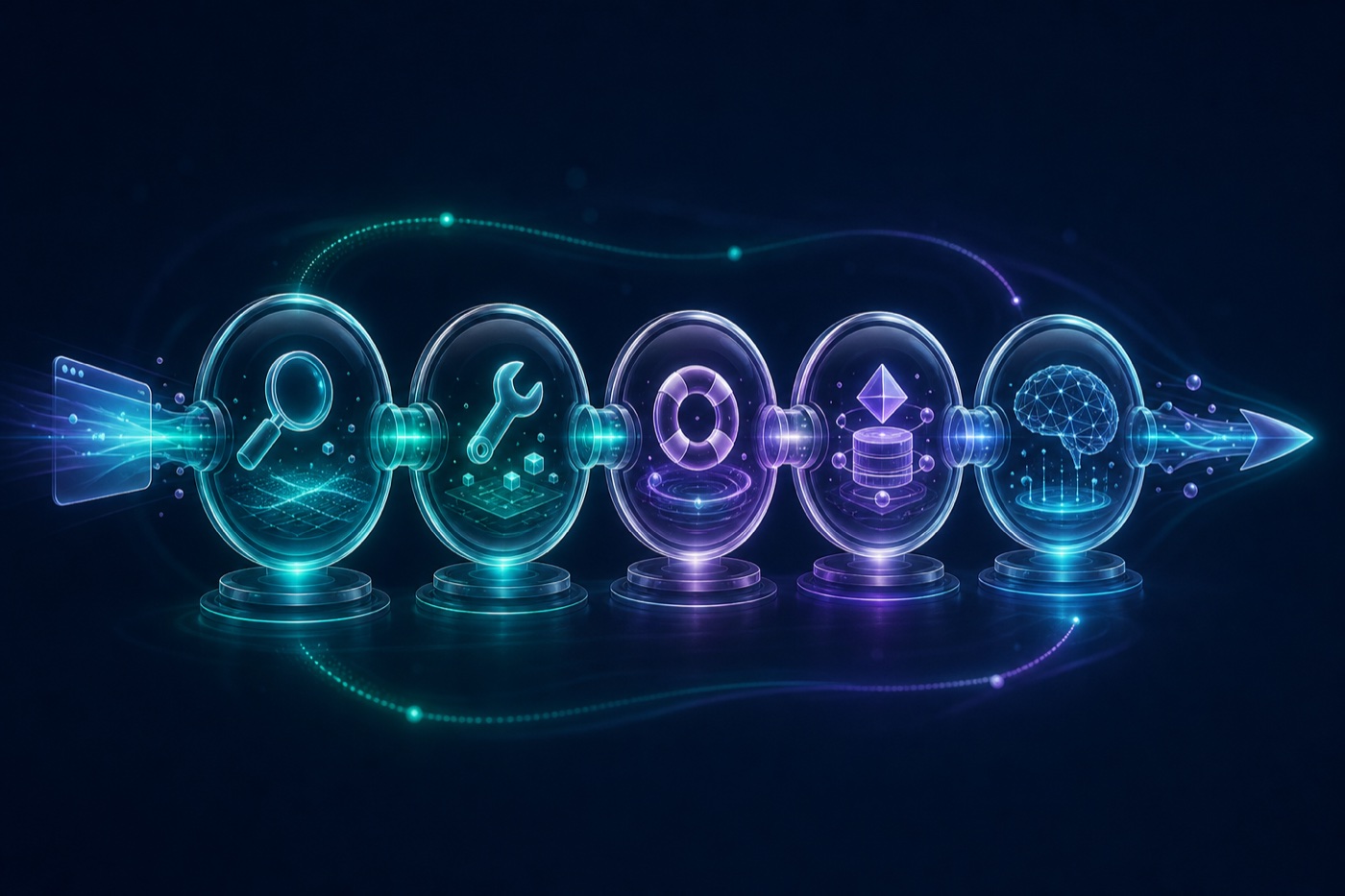
Browser agents fail on real websites — hover-only menus, cookie walls, hidden modals, 2FA, payment steps. AgentGlass turns those failures into measurable, fixable infrastructure: Inspect · Repair · Rescue · Transact · Learn.
The reliability layer for the agentic web
AgentGlass

Five jobs that make agents reliable on real sites.

AgentGlass scans websites with browser agents, scores where they fail, generates verified DOM/ARIA patches, escalates human-only blockers, and supports paid agent actions through HTTP 402 flows.

1
InspectScan sites with browser agents and score Agent Readiness.
2
RepairGenerate verified DOM/ARIA patches for agent-breaking UI.
3
RescueBatonPass hands off to a human on 2FA, approval, or CAPTCHA.
4
TransactPayGate402 runs HTTP 402 payments, receipts, spend policy.
5
LearnTurn repeated failures into reusable recipes — cheaper, more reliable runs.
Inspect, Repair, Rescue, Transact, Learn
The agentic-web stack

Three products, one promise: agents that finish the job.

The core of AgentGlass ships as a connected stack — inspect and repair the site, rescue the agent when it's blocked, and let it pay its way through.

Inspect · Repair

AgentGlass

Scan any site with browser agents, score Agent Readiness, and generate verified DOM/ARIA patches before agents break.

Rescue

BatonPass

A sub-10-second human handoff when a web agent hits 2FA, approval, CAPTCHA, or a novel blocker — phone buzzes, human clears it, agent resumes.

Transact

PayGate402

HTTP 402 agent payments with receipts and spending policy — plus a dispute engine for when a paid action goes wrong.

Selected work & recognition

Practical AI systems — reliability, evaluation, deployment.

2026
$10K — Meta PyTorch OpenEnv Hackathon (San Francisco)

Won with OpsGate, a simulation-based reliability gate for enterprise agents. 103 projects, ~700 participants — the only solo winner.

2026
MemoryLint — Ranked #1 of the top 10 hack projects (Claude · Anthropic Opus 4.7)

A governance layer between an AI agent's memory and the code it ships: deterministic checks at keystroke time, auditable evidence at compliance time, one verdict at merge.

2026
LexFusion — presented at Stanford Law School (Stanford CodeX)

An AI legal-intelligence platform — 3 engines (ContractExtractor, LitigationPackager, PatentClaims), 28 agents, 938 tests, 200+ API endpoints. Built on MemoryOS.

AWS
Solo top scorer, AWS GameDay (problem-solving for startups)

Improved model performance from 56% to 97.1% accuracy across hands-on AI/ML problem solving.

80+
systems shipped
$10K
solo hackathon win
56→97%
accuracy lift
#1
MemoryLint, ranked by Claude
About

Builder across AI, ML, RL, CV, and agent evaluation.

What I focus on

I build practical AI systems centered on reliability, evaluation, and enterprise deployment — most recently the reliability layer for the agentic web. Currently looking for collaborators working on browser agents, agent reliability, and the agentic web.

Background

PhD (UK) — Microbial Molecular Genetics, University of Birmingham, fully funded by the Darwin Trust of Edinburgh (3–5 recipients worldwide), with 4 publications. Certified by AWS and Elastic; 4× Udacity AI/ML nanodegrees.

Contact

Building on browser agents or agent reliability? Let's talk.

San Francisco Bay Area · open to collaborators on the agentic web.